
Demolition and Wall Prep Done Safely
Demolition & Retaining Walls in Lakewood for properties removing structures or preparing sites for wall construction
Old sheds collapse, failing concrete patios crack and heave, and deteriorated retaining walls lean until they fail—but removing these structures without damaging underground utilities, adjacent buildings, or site grades requires controlled demolition and debris management that protects what stays while eliminating what goes. Demolition services from Rhino Excavating LLC address structure demolition with attention to utility locations, haul-off logistics, and demolition site cleanup that leaves the area ready for new construction. Properties preparing for retaining wall installation need retaining wall excavation that establishes stable footing zones, removes unsuitable soils, and grades the site so drainage doesn't undermine the wall after it's built.
Demolition work involves disconnecting utilities, dismantling or breaking structures into manageable pieces, separating materials for recycling or disposal, and grading the site to match surrounding elevations. Retaining wall preparation includes excavating trenches for footings or base courses, cutting into slopes to create level terraces, and establishing drainage paths that prevent water from building pressure behind the wall.
Request a site assessment to evaluate demolition requirements and discuss retaining wall excavation based on your slope conditions.
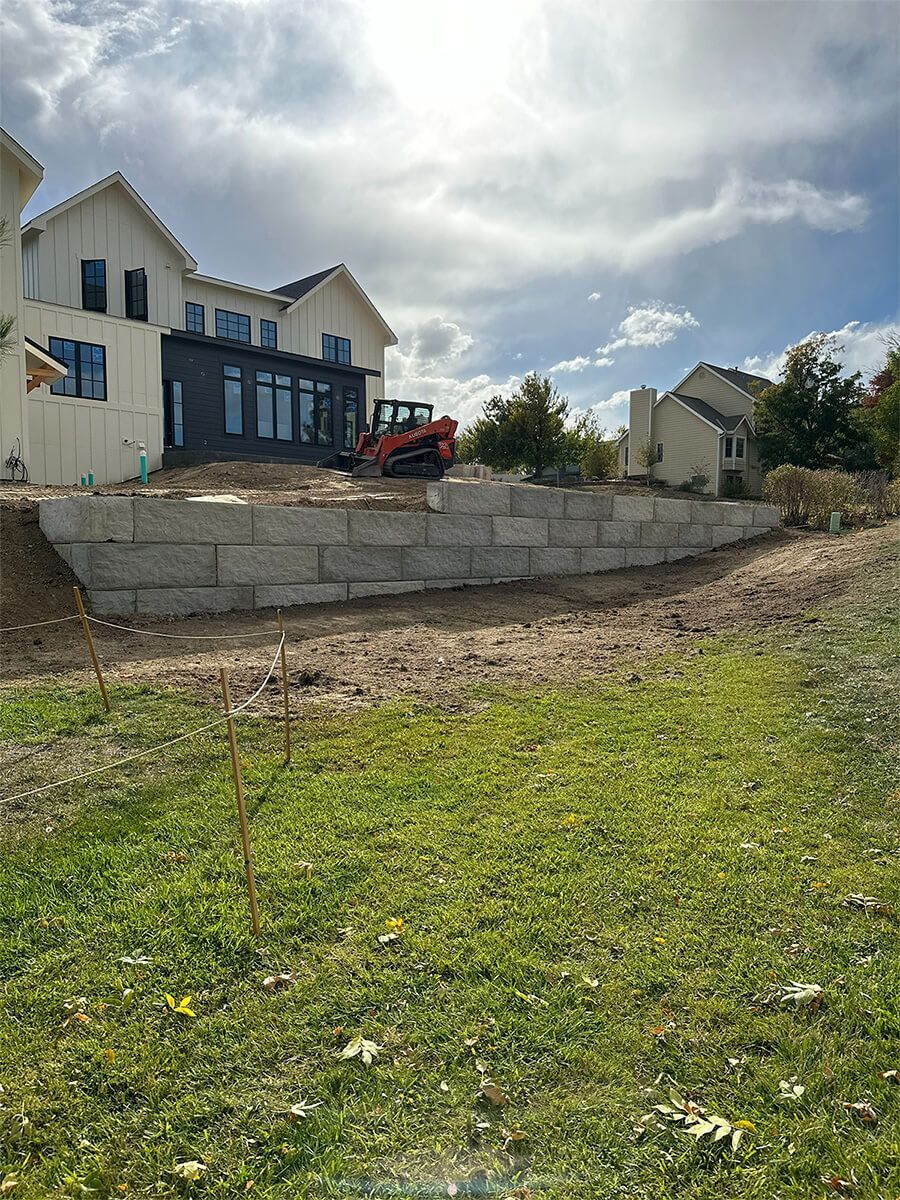
Why Demolition and Wall Excavation Matter for Site Stability
Structure demolition requires sequencing that prevents collapse in uncontrolled directions, protects utilities buried near foundations, and removes debris without spreading contaminants like asbestos siding or lead paint dust. Demolition site cleanup involves sorting wood, metal, concrete, and other materials so recyclable content diverts from landfills and hazardous materials receive proper handling. Sites are graded after debris removal to eliminate depressions or mounds that affect drainage or future construction.
Retaining wall excavation establishes footing trenches below frost depth so freeze-thaw cycles don't shift the wall, and cuts into slopes at angles that provide space for drainage aggregate behind the wall. You notice prepared sites with level base courses, compacted subgrades that won't settle, and excavated soil stockpiled for backfilling after wall construction. Demolition sites show cleared surfaces with utilities protected, grades that shed water correctly, and clean conditions ready for the next phase of work.
Retaining wall preparation varies with wall type—segmental block walls need wide, level base trenches and granular backfill zones, while poured concrete or timber walls require different footing depths and drainage approaches. All retaining walls fail if water pressure builds behind them, so excavation must include paths for groundwater and surface runoff to exit without loading the wall. Proper preparation during excavation prevents the leaning, cracking, and failure that require expensive tearout and replacement within a few years.
Questions Before Starting Your Project
Demolition and retaining wall excavation involve site access, disposal logistics, and safety considerations that property owners need clarified before work begins.
What permits does demolition work require in Lakewood?
Demolition of structures over a certain size, or any work involving utilities, typically requires permits from the city to ensure safe practices and proper disposal. Permit requirements depend on structure type, size, and whether hazardous materials like asbestos are present.
How is demolition debris removed and disposed of?
Debris is loaded into trucks or roll-off containers and hauled to sorting facilities where wood, metal, and concrete are separated for recycling. Materials containing hazardous substances require special handling and disposal at approved facilities, which adds cost and time to the project.
What factors determine retaining wall excavation depth and width?
Footing depth depends on frost line requirements and wall height—taller walls need deeper footings to resist overturning forces. Excavation width accommodates the wall thickness plus drainage aggregate behind it, typically 12 to 18 inches for residential walls under six feet tall.
When should retaining wall excavation occur relative to other site work?
Wall excavation happens after rough grading establishes final site elevations but before landscaping or hardscaping that would be damaged by equipment access. Installing walls early in the construction sequence provides stable terraces for additional work and controls erosion during subsequent phases.
How does retaining wall preparation address drainage behind the wall?
Excavation includes space for drainage aggregate and perforated pipe that collect water seeping through the slope and route it to outlets at wall ends or through weep holes. Without this drainage layer, hydrostatic pressure builds and pushes the wall forward, causing bulging or collapse.
Rhino Excavating LLC handles demolition services and retaining wall excavation with focus on safety, site protection, and preparation that supports stable, long-lasting construction. Set up a consultation to review your demolition or wall project and discuss site-specific requirements.