
Site Work That Supports Pool Integrity
Pool Excavation in Lakewood for properties requiring precise grading and drainage setup before installation
Lakewood's variable soil conditions and seasonal freeze-thaw cycles create specific demands for residential and commercial pool excavation. Rhino Excavating LLC handles pool site preparation with attention to grade accuracy, drainage routing, and subsurface stability that determine whether a pool maintains its structure through Colorado winters. Properties with clay-heavy soils or sloped lots require excavation approaches that address drainage direction and perimeter compaction before any pool shell arrives.
Pool excavation involves removing soil to match engineered pool specifications while establishing perimeter grades that prevent water from migrating toward the structure. The process includes trenching for plumbing lines, creating a stable base layer, and shaping the hole to exact dimensions so the pool shell seats correctly without voids that later cause settling or cracking.
Schedule a site evaluation to review soil conditions and grading requirements for your planned pool dimensions.
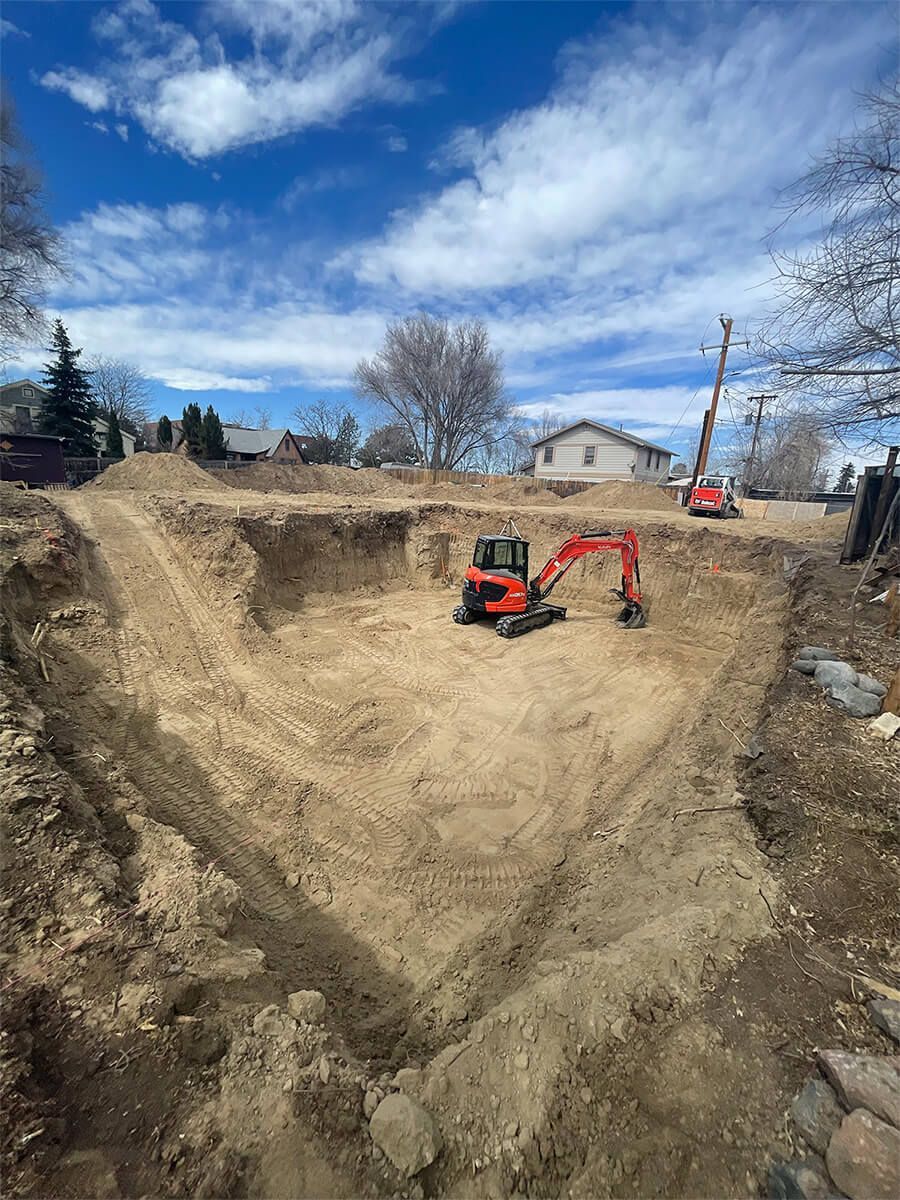
What Proper Pool Site Preparation Requires
Pool digging goes beyond creating a hole—it establishes subsurface drainage paths that keep groundwater from pooling beneath the shell and destabilizing the installation. Excavation and grading for pools includes routing stormwater away from the excavation perimeter, compacting sidewalls to prevent erosion, and removing organic material or unstable soils that compress unevenly under weight.
Once excavation completes, you see a hole with walls cut to precise angles matching pool design specifications, a level base free of rocks or debris, and trenches dug for plumbing that align with connection points. The site no longer shifts or settles because subsurface instability has been removed and replaced with compacted material that supports the pool shell evenly across its footprint.
Residential pool excavation differs from commercial work primarily in scale and access requirements. Commercial projects often involve larger equipment, deeper excavation for diving features, and coordination with structural engineers for pools integrated into building designs. Both require the same attention to subsurface conditions, but commercial timelines and inspection requirements add complexity to scheduling and site logistics.
Questions Property Owners Ask Before Pool Excavation
Pool excavation projects in Lakewood raise practical concerns about site access, timing relative to weather, and how soil conditions affect the work. The following addresses the most common considerations.
What happens if excavation uncovers rock or unexpected soil conditions?
Work pauses while the rock is removed with hydraulic breakers or alternative methods, and the timeline adjusts based on the volume encountered. Soil testing before excavation reduces surprises, but subsurface conditions vary even within a single property.
How does excavation affect existing landscaping or structures near the pool site?
Equipment requires access paths wide enough for machinery, which may temporarily disturb lawns, driveways, or plantings. The excavation plan accounts for proximity to fences, retaining walls, and utility lines to avoid damage during digging.
When is the best time to schedule pool excavation in Lakewood?
Spring and early summer provide the most stable weather windows, avoiding winter ground freeze and late summer thunderstorms that turn excavation sites into mud pits. Soil dries faster in May and June, keeping the project on schedule.
What site preparation does the property owner need to handle before excavation starts?
Clear the work area of furniture, planters, and temporary structures. Mark or relocate sprinkler lines, and confirm that all utility locates are current. Access gates or fencing may need temporary removal if equipment exceeds standard entry widths.
How is excavated soil managed during pool digging?
Soil is stockpiled on-site for backfilling around the pool perimeter or hauled off if the volume exceeds what the project requires. The approach depends on available space, soil quality, and whether grading plans call for imported fill material with better compaction characteristics.
Rhino Excavating LLC coordinates pool excavation with attention to site access, soil stability, and drainage integration that supports long-term pool performance. Request a consultation to walk the site and discuss excavation logistics specific to your property layout.