
Septic Systems Installed for Long-Term Function
Septic Installation in Lakewood for properties requiring new septic systems or replacing failed leach fields
A septic system fails when the leach field saturates, the tank cracks from unstable backfill, or installation depth doesn't account for seasonal groundwater levels. Septic excavation creates the stable, properly graded environment that determines whether your system processes waste effectively for decades or fails within years. Rhino Excavating LLC handles residential septic systems and commercial septic systems with attention to soil testing results, setback requirements from wells and property lines, and excavation techniques that preserve sidewall stability during tank placement and leach field trenching.
Septic site preparation involves excavating a hole for the tank at depths calculated from inlet pipe elevation, cutting trenches for leach field laterals with precise slope to distribute effluent evenly, and placing gravel bedding that supports pipes while allowing liquid infiltration. Soil removed during excavation is tested for percolation rates that determine leach field sizing, and unsuitable material is replaced with imported fill that meets absorption standards.
Schedule a site evaluation to review soil conditions, setback requirements, and septic system sizing for your property.
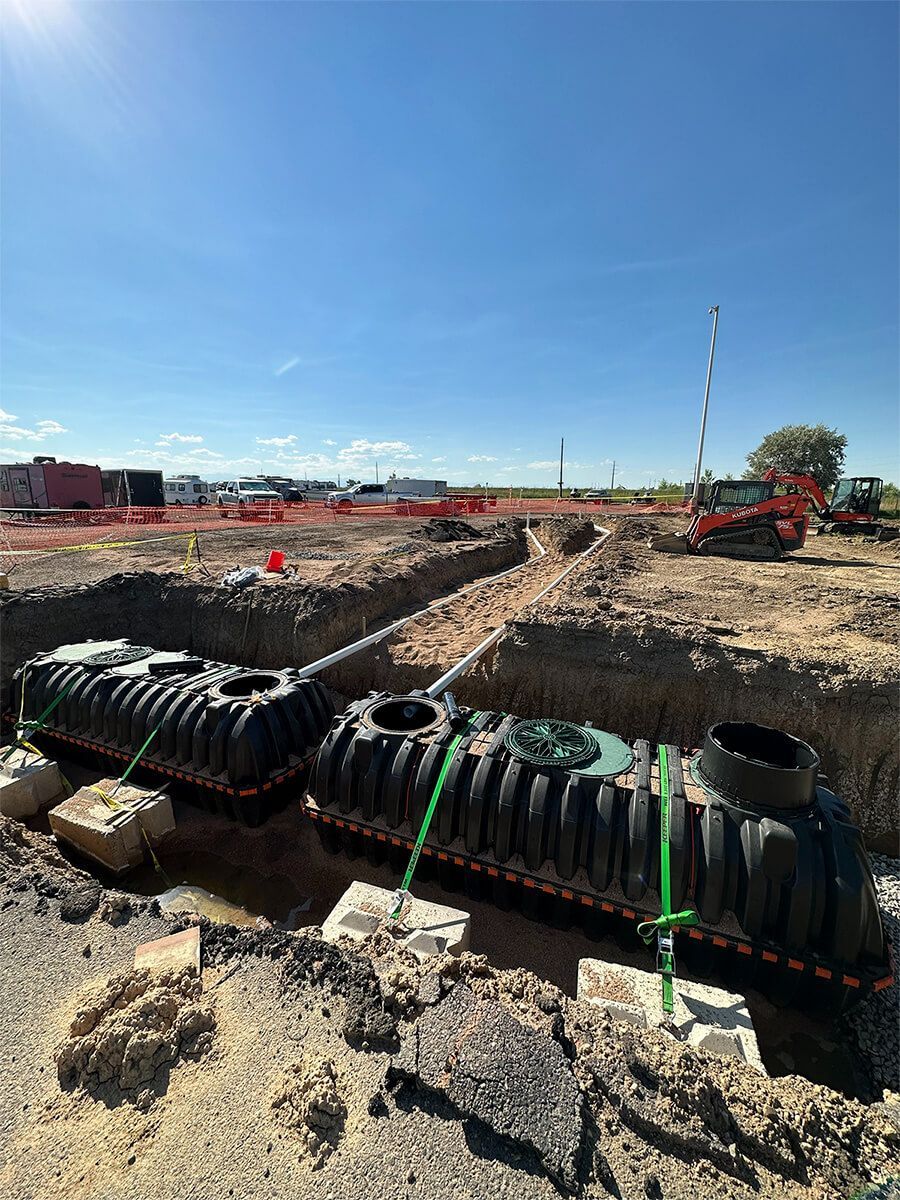
What Septic System Excavation Actually Accomplishes
Septic system installation requires tank placement on undisturbed or properly compacted soil to prevent settling that cracks inlet or outlet connections. Leach field trenches are cut level or with minimal slope so effluent distributes uniformly across all laterals instead of overwhelming the first trench and leaving others dry. The excavation process also establishes drainage grades that keep surface runoff and groundwater from flooding the leach field, which would saturate soils and prevent them from absorbing septic effluent.
After installation completes and inspections pass, your property has a septic system that processes wastewater without surfacing effluent, odors, or backups. The tank sits level and stable, access risers extend to grade for pumping without excavation, and the leach field absorbs effluent at rates matching daily wastewater generation. Surfaces above the system restore to original grades, and vegetation reestablishes without settling or soft spots that indicate poor compaction.
Commercial septic systems differ from residential installations in tank size, the number of leach field laterals, and the engineering requirements that govern design. Commercial systems often include multiple tanks for settling and treatment stages, alarm systems that signal malfunctions, and larger excavation footprints that require coordination with site utilities and stormwater management. Both system types follow the same installation principles, but commercial projects involve more rigorous inspection schedules and documentation for health department approval.
What Property Owners Usually Ask
Septic installation involves health department permits, soil testing, and setback rules that raise questions about feasibility, timing, and costs. These answers clarify the most common concerns.
What soil conditions prevent septic system installation?
Soils with very high clay content, bedrock close to the surface, or seasonal high water tables within a few feet of the leach field may fail percolation tests and require engineered alternative systems such as mound systems or aerobic treatment units. Soil testing determines feasibility before excavation begins.
How long does septic excavation and installation take for a residential property?
Excavation, tank placement, and leach field installation typically complete in two to four days, depending on soil conditions, system size, and weather. Permit approvals, soil testing, and inspection scheduling add weeks to the overall project timeline beyond the physical work.
What setback distances apply to septic systems in Lakewood?
Septic tanks and leach fields must maintain minimum distances from wells, property lines, surface water, and structures as defined by Jefferson County health regulations. These setbacks vary based on system type and site conditions, so confirming compliance happens during the permit application process.
Why does septic site preparation require soil testing?
Percolation tests measure how quickly soil absorbs water, which determines leach field size and design. Soils that drain too slowly require larger leach fields or alternative treatment systems, while soils that drain too quickly may need deeper installation or additional treatment stages to prevent groundwater contamination.
How is excavated soil managed during septic installation?
Suitable soil is stockpiled for backfilling around the tank and over leach field trenches, while unsuitable material is hauled off and replaced with clean fill or gravel that meets system specifications. Topsoil is set aside separately and replaced as the final surface layer to support vegetation restoration.
Rhino Excavating LLC coordinates septic excavation and installation with attention to soil conditions, regulatory compliance, and construction practices that support long-term system performance. Reach out to discuss septic system options and site suitability for your property.