
Underground Infrastructure Built to Code
Utility Installation in Lakewood for properties adding water lines, gas service, or underground infrastructure
Underground utilities fail when trenching depth, bedding material, or backfill compaction doesn't meet the standards required for the line type. You need utility installation that routes water lines below frost depth, protects gas lines with proper separation from other services, and uses bedding material that prevents pipe movement or damage from settling. Rhino Excavating LLC handles utility trenching and underground infrastructure installation with attention to Colorado frost line requirements, municipal code compliance, and coordination with utility providers for inspections.
Utility installation involves trenching to specified depths, placing bedding sand or gravel to cushion pipes, laying the utility lines with correct slope for drainage, and backfilling in compacted lifts to prevent voids that cause surface settling. Water lines, gas lines, and other underground utilities each carry specific depth and separation requirements that affect trench layout and sequencing when multiple services run parallel.
Arrange an on-site review to map utility routing and confirm trench depths for your service requirements.
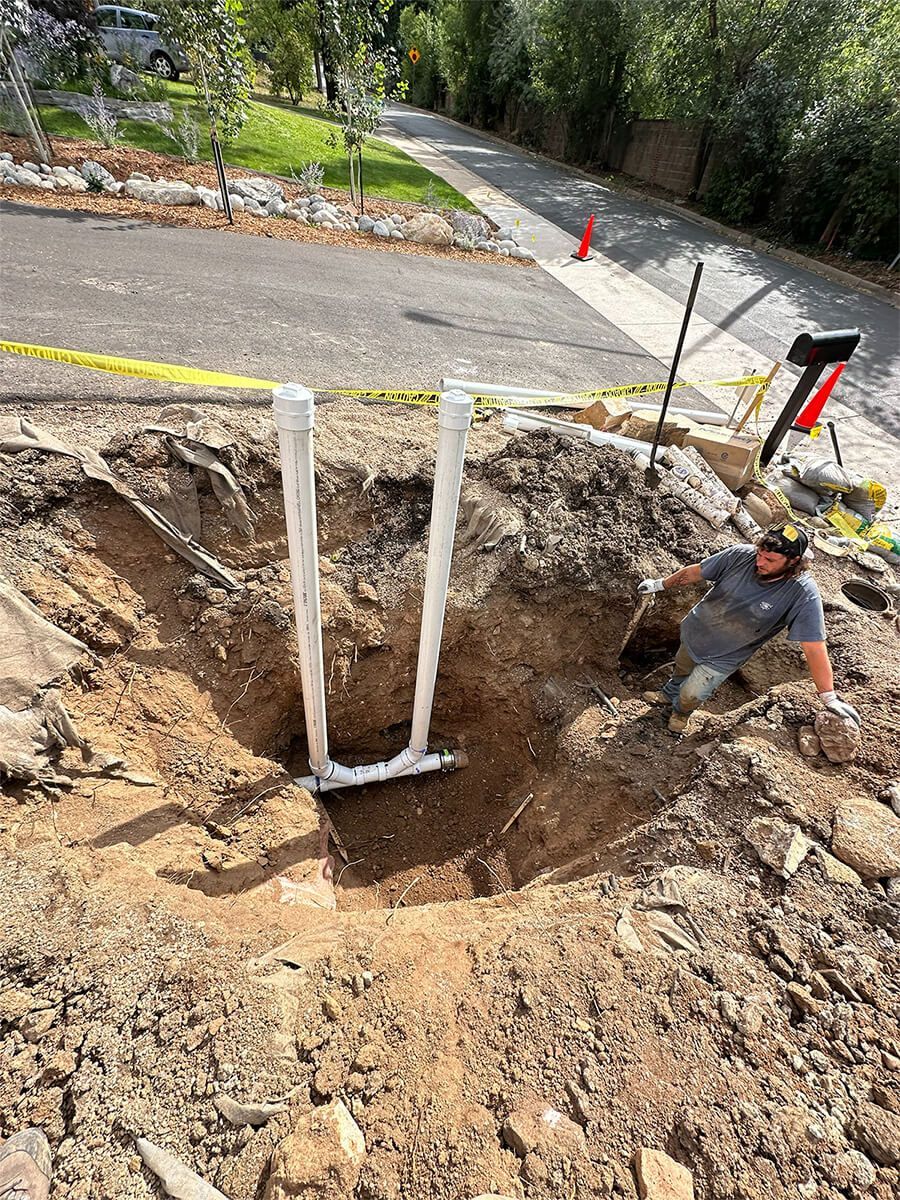
How Underground Utility Work Addresses Service Needs
Utility trenching requires precision in depth and alignment because gas lines must maintain clearance from electrical conduits, and water lines need consistent slope to prevent air pockets that reduce flow. Trenches are cut narrow enough to minimize surface disruption but wide enough to allow proper bedding installation and compaction equipment access. Hand digging or vacuum excavation is used near existing utilities to avoid strikes that shut down service or create safety hazards.
After utility lines are placed and inspected, trenches are backfilled in controlled layers, each compacted to density standards that prevent the ground surface from sinking months later when rain saturates loose fill. You see restored surfaces that remain level, utility access points clearly marked, and services that function without leaks, pressure loss, or interruption caused by shifting soils.
Underground infrastructure projects often include conduit for future electrical or data lines, allowing property owners to add services later without re-excavating. Conduit placement is documented with measurements from permanent landmarks so future work locates the path without exploratory digging. This approach reduces long-term costs and avoids damage to landscaping or hardscaping installed after initial utility work completes.
Answers to Frequent Service Questions
Utility installation involves coordination with local inspectors and service providers, raising questions about timelines, access, and what the work disrupts. These answers clarify the process.
What determines trench depth for different utility types?
Water lines in Lakewood must sit below the 36-inch frost line to prevent freeze damage, while gas lines follow depth standards set by the local utility provider, typically 18 to 24 inches for residential service. Electrical conduit and data lines have separate requirements based on voltage and cable type.
How long does utility trenching take for a typical residential project?
Trenching and backfill for a single service line to a house or outbuilding often completes in one to two days, depending on distance, soil conditions, and whether rock or existing utilities complicate the route. Inspection scheduling adds time beyond the physical work.
What happens to landscaping or driveways crossed by utility trenches?
Trenches are cut as narrow as code allows, and surface materials are removed, stockpiled, and replaced after backfill compaction. Asphalt or concrete requires saw cutting and patching, which may show slight color variation until weathering blends the repair.
Why does utility installation require multiple inspections?
Inspectors verify trench depth, bedding material, pipe type, and backfill compaction at different stages before allowing work to proceed. Each inspection confirms code compliance and prevents problems that would require excavation and rework after the trench is closed.
How are existing underground utilities located before trenching begins?
Colorado law requires utility locates through the 811 notification system before any excavation. Locators mark public utilities, but private lines on your property—such as irrigation, landscape lighting, or secondary gas lines—require separate detection or hand digging to expose and protect during trenching.
Rhino Excavating LLC manages utility trenching and underground infrastructure projects with documentation and inspection coordination that keeps installations compliant and functional. Contact us to discuss routing and scheduling for your utility needs.