
Complete Infrastructure From Clearing Through Paving
Full Site Development in Lakewood for commercial and residential projects requiring coordinated earthwork and infrastructure installation
Full site development integrates clearing, excavation, utility installation, grading, and final surface preparation into a sequenced plan that moves projects from raw land to construction-ready condition. Rhino Excavating LLC coordinates earthwork trades and schedules to prevent conflicts, minimize rework, and keep development timelines on track. Your project requires managing soil movement, utility coordination with multiple providers, erosion control during phased construction, and inspection approvals at critical milestones before proceeding to subsequent steps.
Land preparation begins with surveying to establish benchmarks and layout, followed by clearing vegetation and stripping topsoil to stable subgrade. Excavation creates building pads and utility corridors, with trenching and pipe installation occurring before backfilling and compaction restore site elevations for final grading and paving.
Arrange a comprehensive site review to outline development phases and coordination requirements for your property.
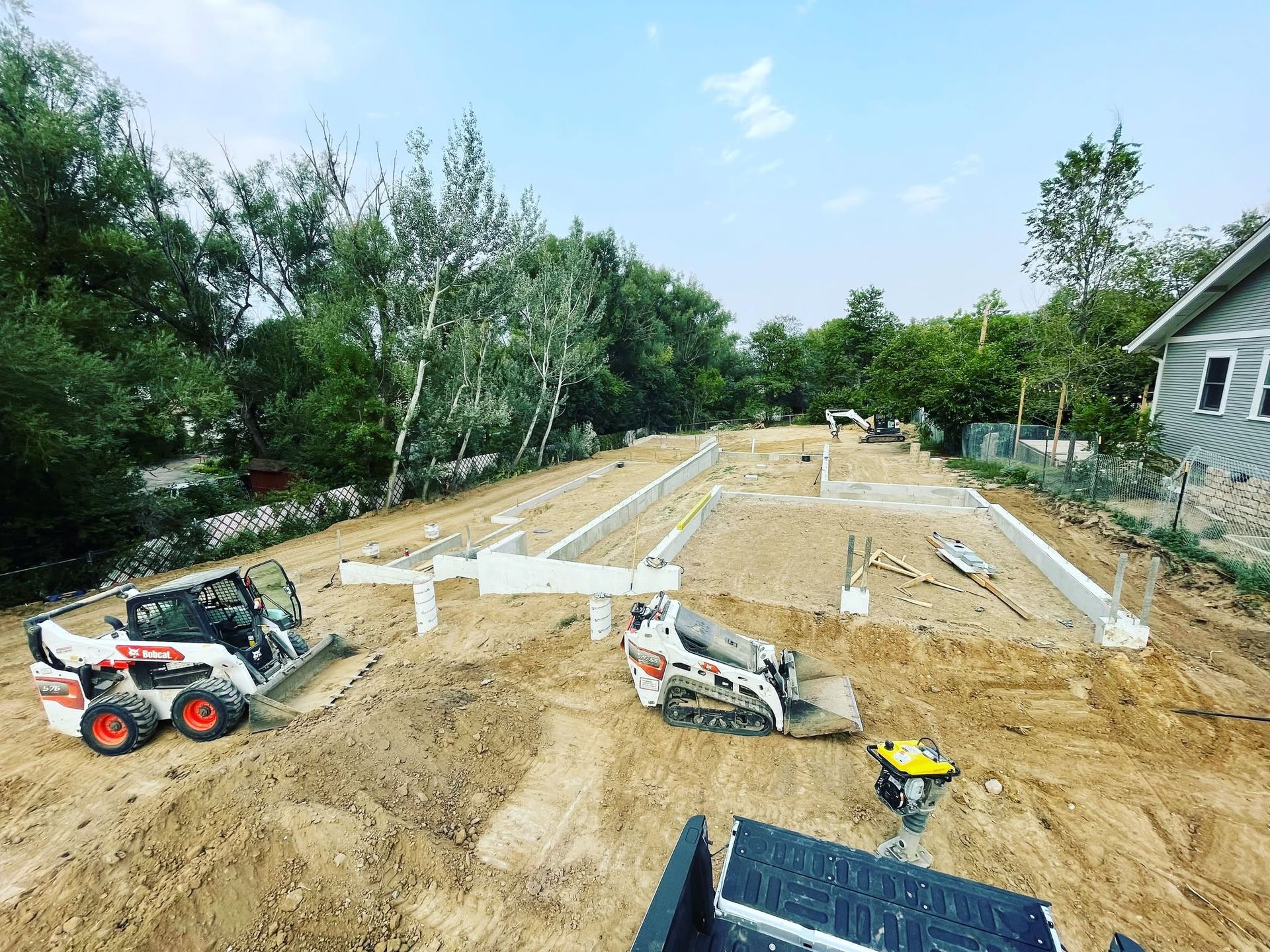
What Complete Site Development Includes
Site development encompasses clearing and grubbing, mass grading to rough elevations, utility trenching for water, sewer, storm drainage, electrical, and gas services, installation of detention or retention basins when required by stormwater permits, fine grading to final elevations, and subgrade compaction for roads, parking areas, and building pads. Each phase requires inspection and approval before proceeding, with soil testing, compaction verification, and utility pressure tests documented to satisfy municipal and engineering requirements.
After development is complete, your site features functional utilities stubbed to building locations, roads and parking areas graded and ready for paving, stormwater systems that handle design flows without flooding adjacent properties, and landscaped areas shaped to final grades with topsoil replaced for planting. Infrastructure operates as designed, supporting building construction and occupancy without costly post-construction repairs or drainage corrections.
Complete construction site preparation involves coordinating with civil engineers, utility companies, building inspectors, and environmental regulators to sequence work that complies with permits and construction documents. Projects in Lakewood often require additional stormwater controls due to clay soils and downstream water quality regulations that limit sediment discharge during construction.
What to Know Before Starting Site Development
Site development involves multiple trades, regulatory approvals, and sequencing decisions that affect cost and schedule. These questions address common considerations during planning and execution.
How long does full site development typically take?
Development duration depends on property size, soil conditions, utility complexity, and inspection schedules, with small residential sites completing in weeks while large commercial developments may span months due to phasing requirements and weather delays.
What permits are required for site development?
Most projects require grading permits, utility connection permits, stormwater discharge permits if disturbing more than one acre, and right-of-way permits if work affects public streets, with applications submitted before work begins and inspections scheduled at defined construction milestones.
How are utilities coordinated during development?
Utility installation requires scheduling water, sewer, electric, gas, and telecom providers to trench, install, and test services according to civil plans, with excavation contractors installing conduit and pipe in some cases while utility companies make final connections and service activations.
What soil testing occurs during site development?
Compaction tests verify that fill and subgrade meet density specifications, with nuclear density gauges or sand cone tests conducted in lifts as soil is placed, and proctor tests establishing maximum density values used to calculate required compaction percentages.
How do phased developments affect earthwork?
Phased projects require temporary erosion control, stabilized construction roads that access future phases without damaging completed work, and grading plans that account for tie-ins between phases so drainage and elevations match correctly as construction expands across the property.
Rhino Excavating LLC manages residential and commercial site development projects with full coordination of earthwork, utilities, and regulatory compliance. Contact us to discuss development schedules and site-specific requirements for your Lakewood project.